Beginners
Architecture photos on a phone: keep vertical lines straight in camera
A phone architecture photography method for straighter buildings, cleaner interiors, level horizons, and deliberate symmetry before you start editing.
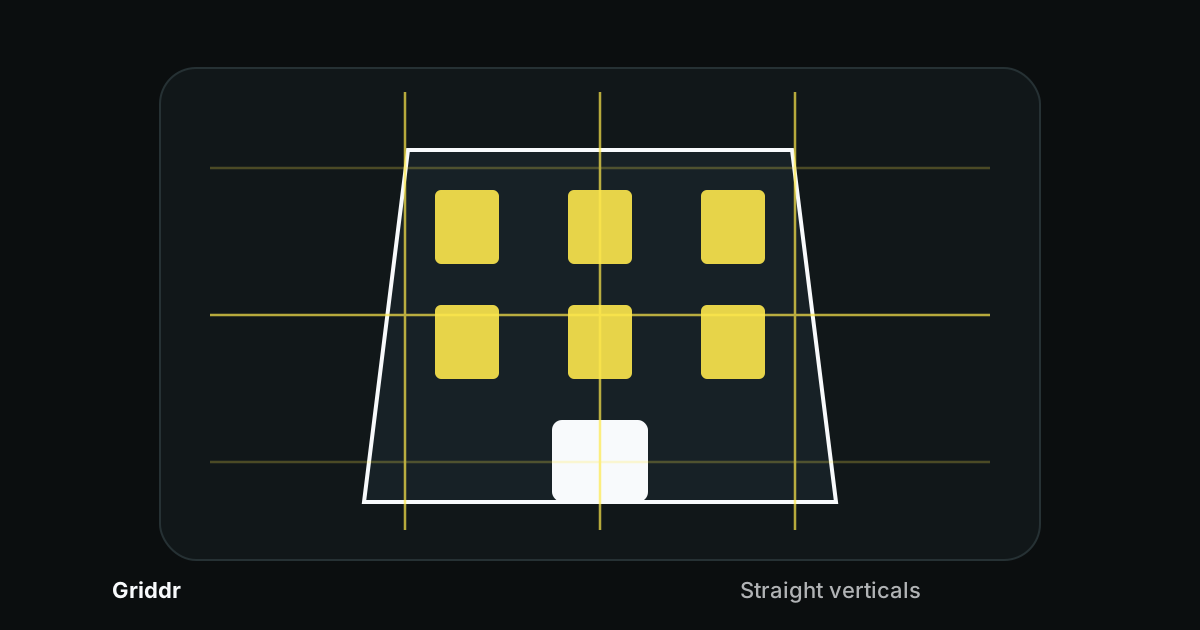
Most bad phone architecture photos have the same problem: the building looks like it is falling backward. The fix is not a filter. It is holding the phone square to the subject and checking the vertical lines before you shoot.
Architecture gives you more alignment clues than almost any other subject. Door frames, window edges, columns, tile seams, shelves, walls, stair rails, and rooflines are all telling you whether the phone is level. A grid lets you actually listen.
Why buildings lean on phones
Buildings lean when the phone tilts up or down. The moment the lens is no longer parallel to the facade, vertical lines start converging. You point up to fit the roof, and the building narrows toward the top. You point down in an interior, and the walls start sliding away from each other.
Editing apps can correct some perspective, but correction costs pixels and often makes the photo feel stretched. It is better to start straighter.
The habit is simple: step back before tilting up.
Use a vertical-first grid
For architecture, build or choose a grid with strong vertical references:
- A vertical center line at 50%.
- Two vertical rails at 33% and 66%.
- A horizontal center line at 50%.
- Optional outer rails at 10% and 90% for margins.
Save it as Architecture rails.
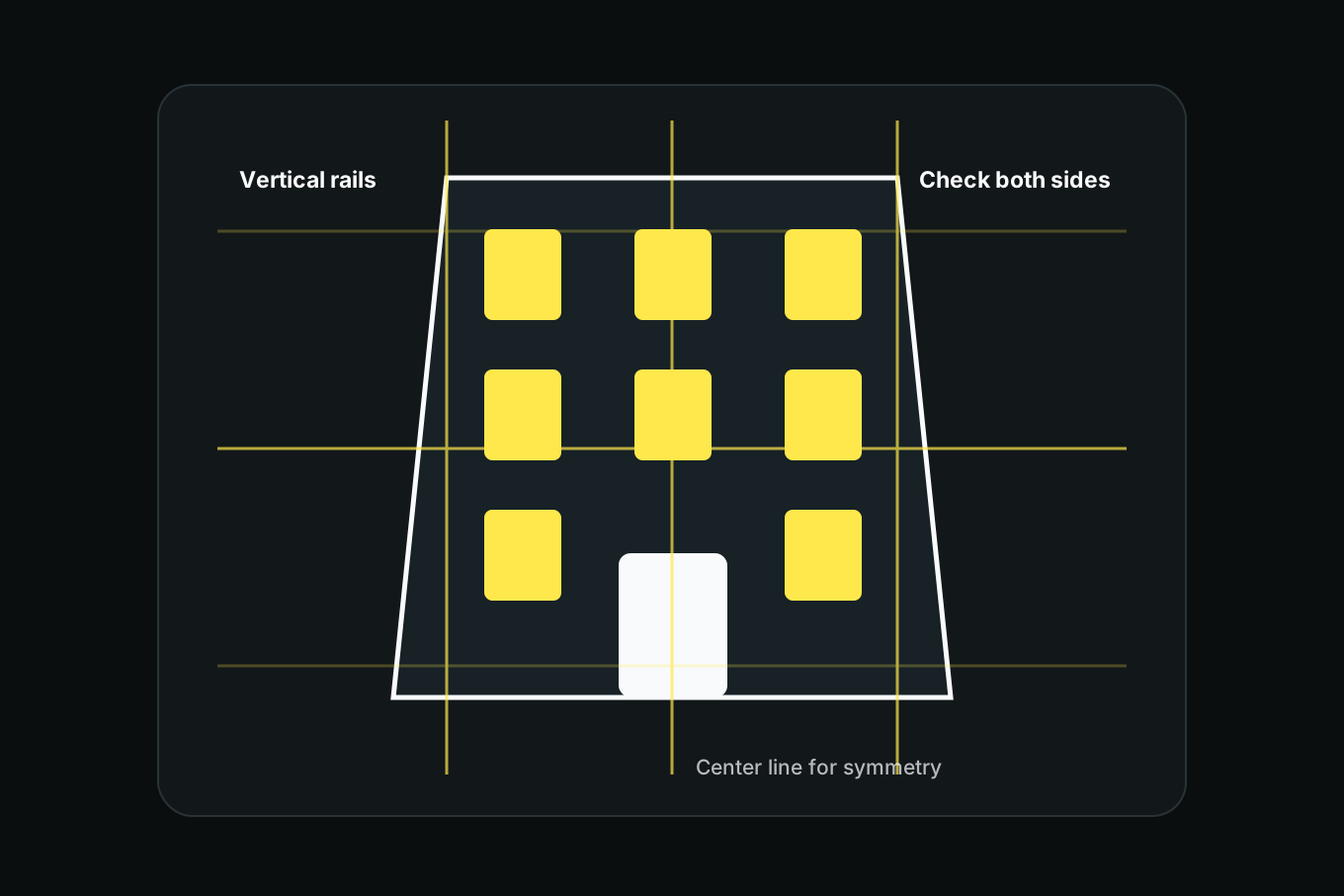
The vertical rails are your truth lines. If a window edge leans away from them, either the building is actually leaning or your phone is. Usually it is your phone.
The straight-building routine
Use this routine for facades, interiors, storefronts, museums, hotels, rentals, and street scenes:
- Stand farther back than feels necessary.
- Hold the phone at chest height, not above your head.
- Keep the phone as vertical as you can.
- Align one real vertical edge to a grid rail.
- Check a second vertical edge on the opposite side.
- Move your feet left or right until the composition feels balanced.
- Only then decide whether to crop tighter.
The key is step 5. One aligned edge can fool you. Two aligned edges tell you the frame is actually square.
Facades, interiors, and details
Facades. Use the center line for the main doorway, column, or central window stack. If the building is symmetric, center it completely. If it is not, place the most important vertical feature on a third.
Interiors. Align door frames, wall corners, cabinets, shelves, and windows. Interior photos look cheap when walls lean. The grid makes that lean obvious before the room is photographed.
Staircases and railings. If the image is about diagonal movement, let the diagonal lead. Use the vertical rails to keep the walls honest, then let the stairs create energy.
Details. For tiles, signs, plaques, windows, artwork, and patterned walls, switch to a 4x4 grid. Dense grids make small alignment errors easier to see.
When the horizon matters more
Architecture often includes a horizon: a roofline, street edge, countertop, shelf, floor seam, or balcony rail. If the photo feels tilted even though the verticals look close, check the strongest horizontal line.
For city skylines, interiors with long counters, and street photos with a visible curb, use the same method from level every horizon: pick one horizontal reference and make it agree with the grid.
Do not try to satisfy every line in a messy room. Old buildings, wide lenses, and imperfect interiors can disagree with themselves. Choose the line the viewer will notice first.
Architecture composition starts with a promise: the walls are not accidentally leaning.
When leaning is allowed
Sometimes the lean is the photo.
Tilt on purpose when you want a building to feel tall, dramatic, cramped, dizzy, or monumental. Pointing straight up in a city canyon can be great. Shooting a tower from the base can be great. A staircase cutting hard across the frame can be great.
The difference is intention. Accidental lean looks like the phone was careless. Deliberate lean looks like the photo has a point of view.
One test: if the whole frame leans a little, it usually feels accidental. If the frame commits to a strong diagonal, it can feel designed. That is when the golden triangle becomes more useful than vertical rails.
Common architecture mistakes
Standing too close. You tilt up to fit the building, and the top collapses inward. Step back first.
Using only the center line. Symmetry needs left and right checks. Align both sides.
Ignoring the bottom edge. Floors, sidewalks, and counters can make a straight wall feel tilted. Check the strongest horizontal line too.
Cropping after correction. Heavy perspective correction cuts away the edges. Leave extra margin when you know you will edit.
Centering a non-symmetric building. If the facade is uneven, center the visual subject, not the whole mass.
Phone architecture photography rewards patience. The scene already gives you lines. Griddr gives you a way to compare them. Once you stop tilting to fit everything, your buildings start looking like buildings again.
Related reading
Shoot this with Griddr
Get Griddr — free on iOS & Android