Custom Grids
Car photography with a phone: a grid for cleaner listing photos
A phone car photography workflow for straight side profiles, readable angles, wheel placement, background cleanup, and repeatable used-car listing images.
Car photos are easy to make shiny and hard to make useful. A listing photo needs to show shape, condition, stance, color, and scale without making the car look warped. The phone can do that, but only if the frame stays honest.
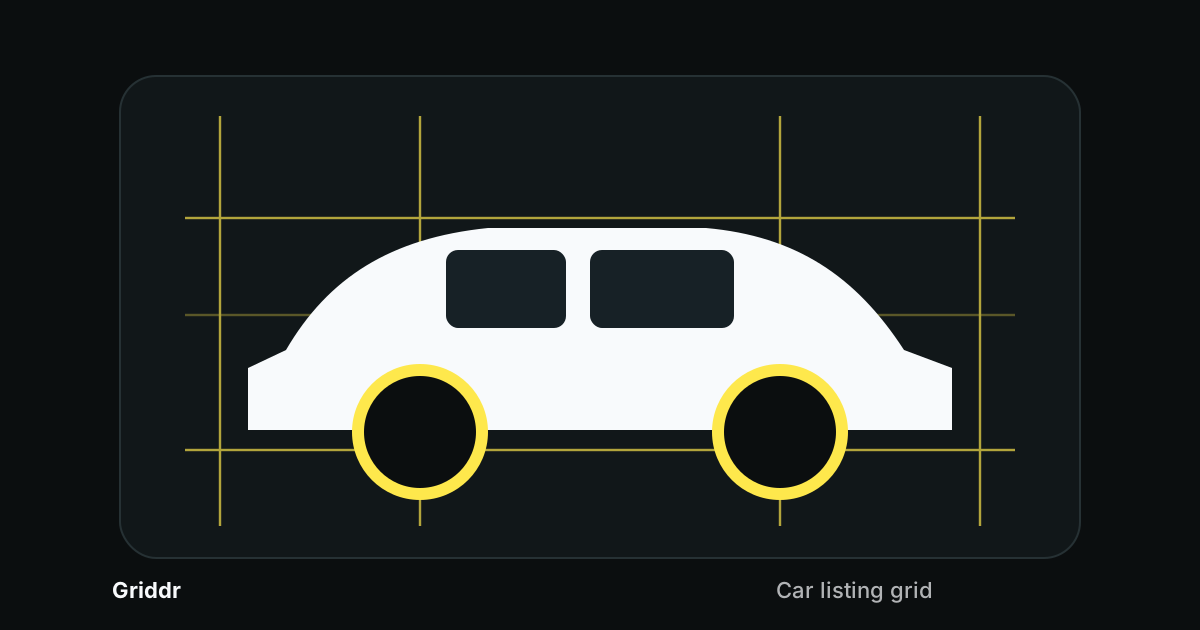
A grid helps by giving the car a stable box: wheel centers, roofline, ground line, and safe margins. Once those are consistent, the photos feel cleaner and buyers can compare angles without decoding the camera.
Start with the side profile
The side profile is the anchor photo for a car listing. It shows the whole shape with the least drama. If the side profile is crooked, too close, or cut off, the rest of the set feels less trustworthy.
Before shooting, find a clean background and park the car with enough space around it. Step back until the whole car fits without touching the frame edges. Use the 1x lens when possible. Wide lenses can stretch the nose and rear corners, especially when you stand too close.
The goal is simple: the wheels should look round, the ground should look level, and the car should fit inside the frame with breathing room.
Build a car listing grid
In Griddr, create a custom grid called Car listing:
- Add a horizontal ground line around 72%.
- Add a roofline guide around 28%.
- Add vertical safe margins at 8% and 92%.
- Add two wheel-center guides around 30% and 70%.
- Add a horizontal center line for straight-on front and rear photos.
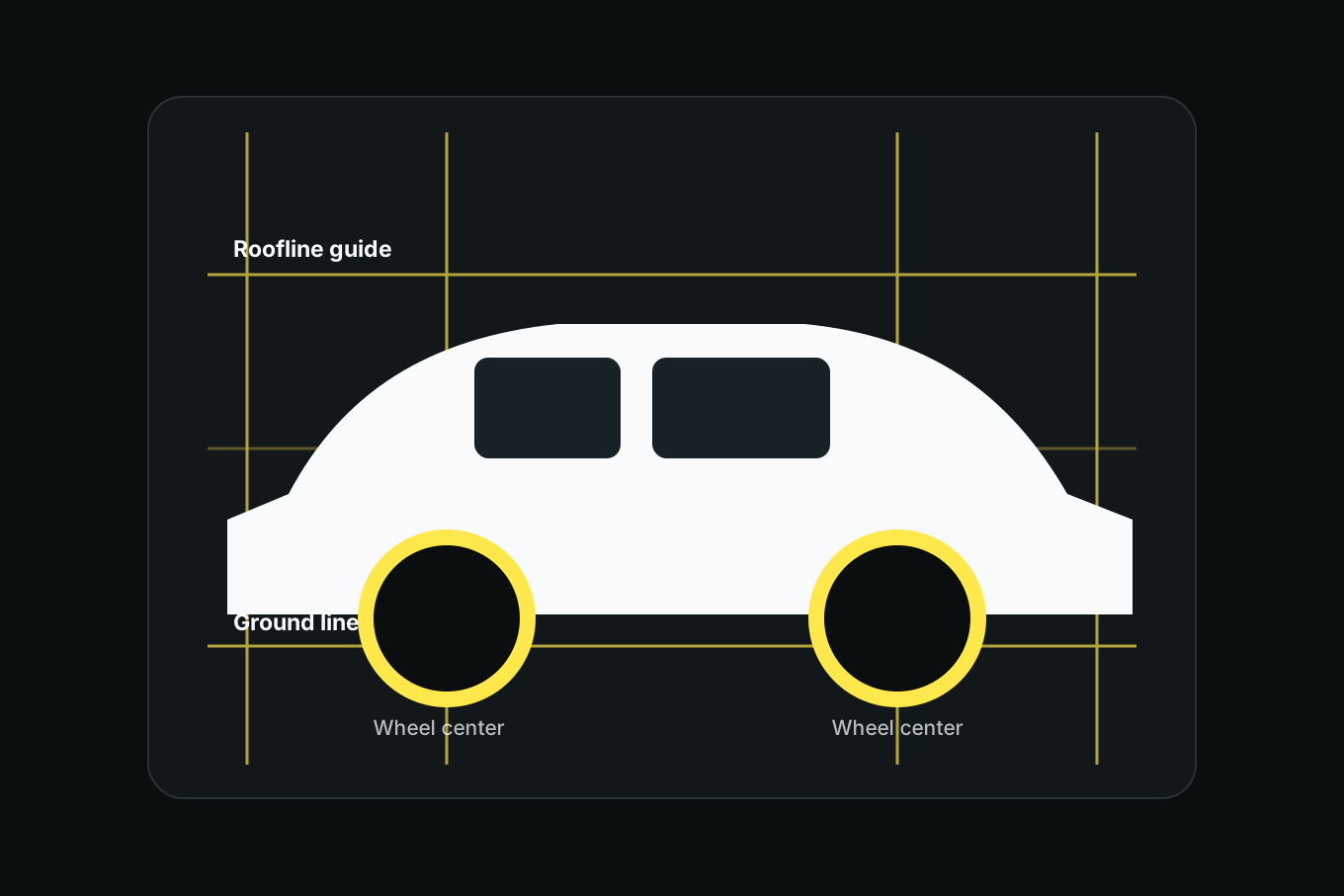
The exact percentages do not matter as much as the repeatability. Save the grid once, then reuse it for every vehicle or every angle in the set.
Align the wheels first
For side profiles, the wheels tell you whether the frame is working. Place the wheel centers near the vertical guides and keep the tires above the ground line. If the front wheel is much closer to the edge than the rear wheel, the car will feel off-center even if the body is technically centered.
For three-quarter views, the wheel guides still help. The near wheel becomes the anchor. Put it near a lower intersection and let the far wheel sit deeper in the frame. That gives the angle shape without pushing the car out of the safe margins.
Shoot the listing set in one pass
Use the same grid for the core set:
- Side profile.
- Front three-quarter.
- Rear three-quarter.
- Straight front.
- Straight rear.
- Interior dashboard.
- Detail shots: wheels, lights, badges, damage, cargo area.
For exterior photos, keep the ground line consistent. For interior photos, switch to the vertical social safe-zone grid if you need app cards or listing thumbnails.
A car listing photo should make the car easy to inspect before it makes the car look dramatic.
Keep reflections and backgrounds quiet
Cars are mirrors with wheels. The background will appear in the paint whether you want it or not.
Before shooting, check for:
- bright poles reflected in doors
- your own reflection in the side panels
- trash cans or signs behind the roofline
- tree shadows cutting across the body
- other cars merging with the silhouette
- a tilted curb or parking line
The grid helps you notice these because background lines become easier to compare against the frame. If a pole grows out of the roof or a curb cuts through the wheels, move the car or move your feet.
When to break the listing grid
The listing grid is for clarity. You can break it for hero shots, but do that after the clear set is done.
Use a lower angle for drama. Use a diagonal for motion. Use a tighter detail crop for texture. Use reflections if they are part of the image. Just do not make the dramatic photo the only useful photo.
For diagonal car angles, the logic is closer to rule of thirds vs. golden triangle: the car points through the frame, so a diagonal guide can feel stronger than a strict box.
Common phone car photo mistakes
Standing too close with the wide lens. The front or rear stretches. Step back and use 1x.
Cutting the tires. Keep tires inside the safe margin unless the crop is deliberately detailed.
Letting the ground tilt. A slanted ground line makes the car feel like it is rolling away.
Mixing angles across the set. If one side profile is from chest height and another is from waist height, the cars are harder to compare.
Hiding condition issues. For listings, detail photos should show damage clearly. Composition should support honesty.
Phone car photography is mostly about trustworthy geometry. Once the wheels, roofline, ground, and crop agree, the car starts looking like itself instead of like the lens was doing the selling.
Related reading
Shoot this with Griddr
Get Griddr — free on iOS & Android