Composition
Travel photography with a phone: use grids for landmarks and people
A phone travel photography composition guide for landmarks, people, horizons, crowds, leading lines, and repeatable trip photo sets.
Travel photos have a common problem: the place is huge, the phone frame is small, and the person you care about is either a dot or blocking the entire landmark.
A grid helps you decide what the photo is about before the crowd moves, the light changes, or your travel partner gets tired of standing there. It turns a big scene into a few simple placement choices.
Choose the subject relationship
Most travel photos are one of three things:
Place first. The landmark, street, mountain, beach, museum, skyline, or building is the subject. People are scale.
Person first. The traveler is the subject. The place is context.
Relationship first. The photo is about how the person fits into the place: walking into a street, looking at a view, framed by a doorway, crossing a bridge.
The grid changes depending on that decision. If the place is first, keep the landmark large and the person small. If the person is first, use portrait rules. If the relationship is first, place person and landmark on different thirds so they can talk to each other visually.
Build a travel landmark grid
In Griddr, save a grid called Travel landmark:
- Add a 3x3 grid.
- Add a horizontal center line for horizons and railings.
- Add a vertical center line for symmetric landmarks.
- Add a diagonal guide from bottom-left to top-right for paths and streets.
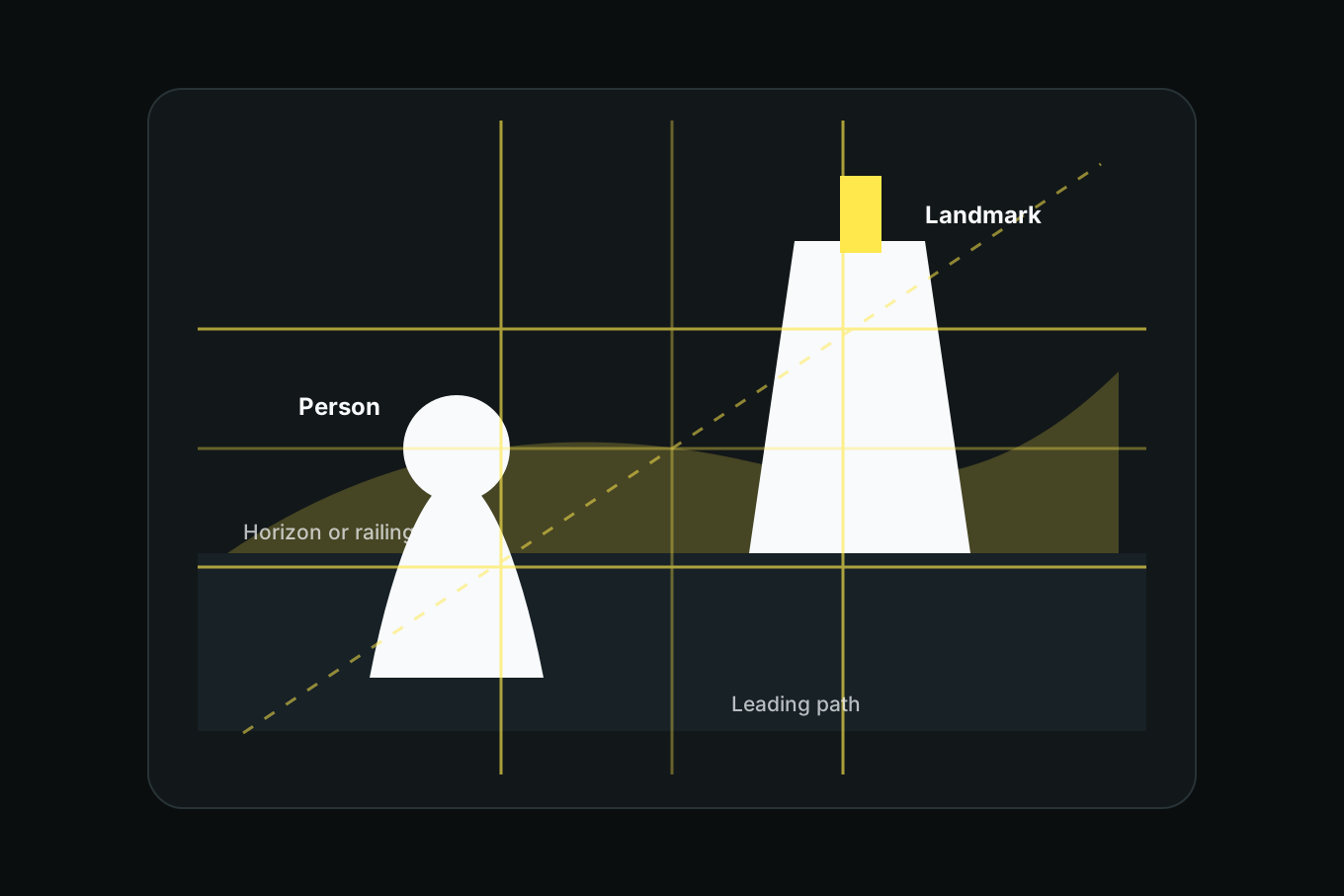
This grid covers most travel scenes: people, landmarks, horizons, paths, streets, stairs, bridges, beaches, and viewpoints.
Put people and landmarks on separate thirds
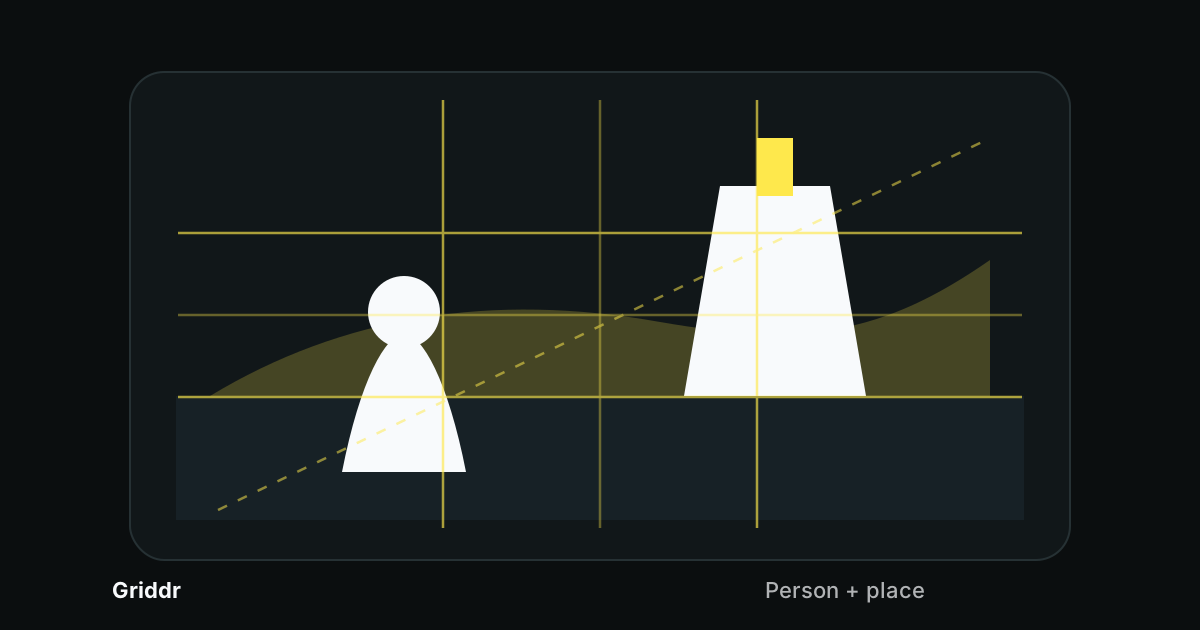
If a person stands directly in front of a landmark, the photo becomes a souvenir snapshot. Sometimes that is fine. But if you want a cleaner composition, separate the person and the landmark.
Put the person on one vertical third and the landmark on the opposite third or center line. Leave space between them. That space makes the relationship visible.
Examples:
- Person on left third, tower on right third.
- Person on lower third, mountain peak on upper third.
- Person centered under an arch, arch centered on the vertical line.
- Person walking along a path that follows the diagonal guide.
If the place is symmetric, center the landmark first and place the person smaller at the bottom or side. Symmetry gets weaker when the main building is almost centered but not quite.
Make the horizon boring
Beaches, overlooks, city skylines, lakes, deserts, rooftops, train platforms, and long streets all punish tilted horizons.
Before shooting, find the strongest horizontal reference and match it to the grid. It might be the actual horizon, but it could also be a railing, roofline, bridge, curb, or waterline. This is the same habit as leveling every horizon, and it matters more when the place is unfamiliar because viewers use those lines to understand the scene.
Once the horizon is stable, decide whether it belongs on the upper third, lower third, or center line:
- Upper third: more foreground, street, water, or path.
- Lower third: more sky, building, mountain, or view.
- Center: symmetry, reflections, calm water, or graphic scenes.
Use leading lines in crowded places
Crowds make travel photos noisy. A diagonal line gives the eye a path through the noise.
Look for:
- streets
- stairs
- bridges
- railings
- shadows
- tile seams
- market aisles
- coastline edges
- rows of windows
Align the strongest line with a diagonal guide, then place the person or destination near where the line leads. This is when the golden triangle can beat rule of thirds: travel scenes often have roads, stairs, and movement.
A travel grid does not make the place smaller. It makes the decision smaller.
Save a trip series grid
If you want a trip album to feel consistent, save one or two recurring grids:
- person on lower-left third, landmark on upper-right
- centered person under symmetric architecture
- horizon on lower third for landscapes
- diagonal street line with subject at the end
Repeating one frame across a trip makes the album feel intentional. It is the same idea as matching composition across a photo series, but looser. The location changes. The visual rhythm stays familiar.
The quick travel shot list
For any memorable place, shoot:
- Wide place-first photo.
- Person-first photo with clean background.
- Relationship photo with person and landmark on separate thirds.
- Detail photo: sign, tile, texture, door, food, map, ticket, or object.
- Vertical social crop with safe space around the subject.
This gives you a useful set without standing in one spot forever.
Common travel photo mistakes
Putting the person too close to the phone. The landmark disappears. Step back and let the place breathe.
Centering everything by default. Center symmetry. Use thirds for relationships.
Letting the horizon drift. Level the boring line first.
Ignoring the crowd shape. If people fill the frame, use a path, railing, or shadow to guide the eye.
Only shooting wide photos. Details make the trip feel specific. Add one close frame for every major scene.
Travel photography with a phone gets easier when you stop trying to fit the whole experience into one frame. The grid helps you choose the one relationship that matters right now: person, place, line, horizon, or detail.
Related reading
Shoot this with Griddr
Get Griddr — free on iOS & Android