Composition
Sunset and landscape photos on a phone: the grid setup that works
A phone sunset and landscape photography workflow for level horizons, sky balance, foreground anchors, silhouettes, and cleaner scenic compositions.
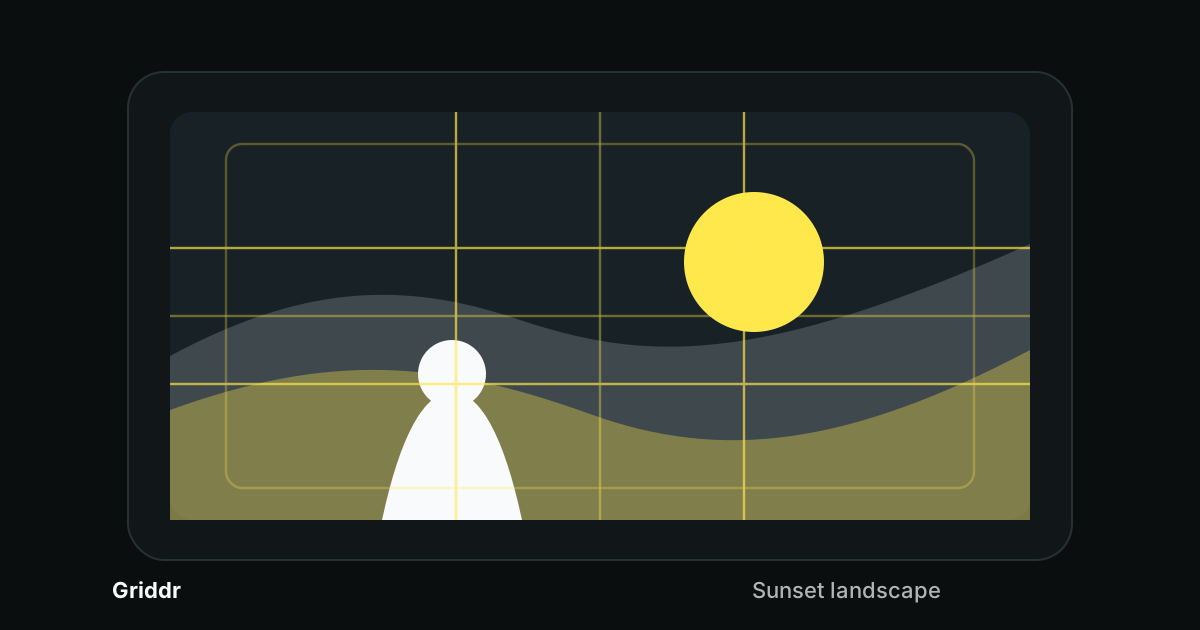
Sunsets are easy to point at and surprisingly easy to flatten. The sky looks incredible in real life, but the phone photo becomes a stripe of color, a tilted horizon, and a dark foreground with no subject.
A grid helps you make one decision before the light changes: where does the horizon go? Once that is handled, you can decide whether the photo is about sky, foreground, reflection, silhouette, or scale.
Start with the horizon
For most sunset and landscape photos, the horizon is the composition. If it tilts, the whole image feels careless. If it sits in the wrong place, the photo feels empty.
Use the grid to choose one of three horizon positions:
Lower third. Use this when the sky is the subject: clouds, color, rays, moon, dramatic weather.
Upper third. Use this when the foreground matters: waves, rocks, grass, desert, road, flowers, city lights.
Center line. Use this for reflections, calm water, symmetry, or very graphic scenes.
This builds on level every horizon, but adds a second question: after the horizon is level, which half of the scene deserves more space?
Build a sunset landscape grid
In Griddr, create a grid called Sunset landscape:
- Add a 3x3 grid.
- Add a stronger horizontal center line.
- Add side safe margins at 8% and 92%.
- Add a foreground anchor zone on the lower third.
- Add a vertical center line for reflections and silhouettes.
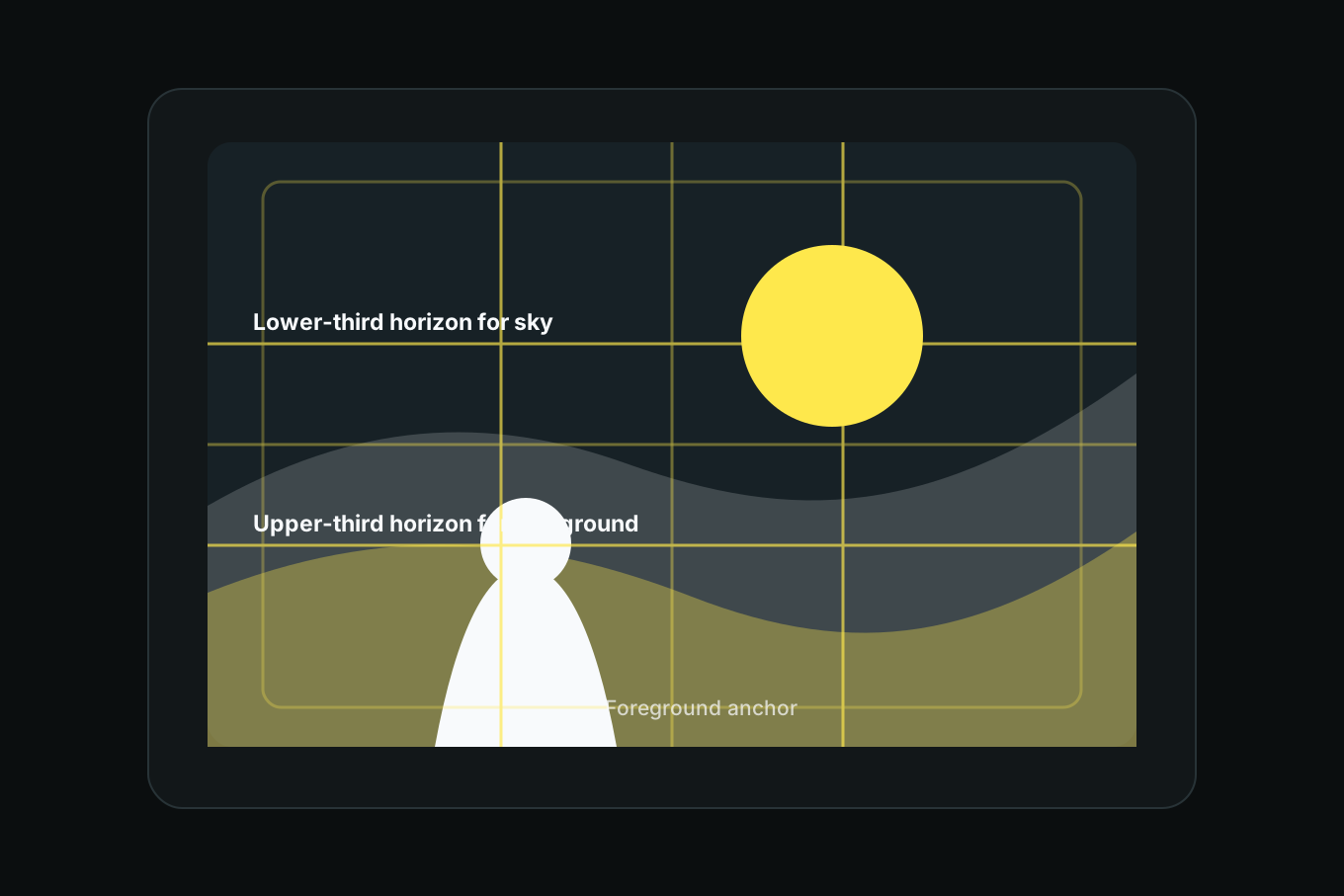
The grid is not there to make every landscape look the same. It is there to keep the big lines from drifting while the light changes.
Add a foreground anchor
A sunset photo with only sky can work, but it often needs a shape to hold the frame. A foreground anchor gives the viewer somewhere to land.
Useful anchors include:
- person or silhouette
- tree
- rock
- path
- wave
- railing
- chair
- flower
- boat
- building edge
Place the anchor on a lower intersection or along a side third. Keep it inside the safe margin so it does not feel accidentally cut off.
A sunset gives you color. Composition gives the color somewhere to go.
Use silhouettes carefully
Silhouettes are strong because they simplify the scene. They also reveal every awkward crop.
If a person is silhouetted, keep the outline clean. Avoid placing the head against a dark tree, roof, or hill. Give arms, hair, and clothing shape enough space to read. If the silhouette is small, put it on a third. If it is the whole subject, center it and keep the horizon level behind it.
For couples, groups, or pets, make sure the shapes do not merge into one blob. A tiny gap between bodies can make the silhouette more readable.
Treat reflections as a second horizon
Water, glass, wet pavement, windows, and polished tables can double the sunset, but they also double your alignment mistakes. If the reflection is part of the photo, use the center line as a symmetry check.
For calm water, try putting the real horizon on the center line so the reflection has equal weight. For waves, puddles, or uneven reflections, put the real horizon on a third and let the reflection act as foreground texture. The important part is that the waterline stays level. A reflection can be abstract. A tilted waterline still feels accidental.
If the reflection is brighter than the subject, move the subject to a side third or crop wider so the eye has a clear path between the real sky and the reflected color.
Do not chase the sun only
The sun is often the brightest part of the scene, but it is not always the subject. Sometimes the best photo is the glow on the clouds, the reflection on water, the color on buildings, or the person watching the sky.
Try three frames:
- Sun on a third.
- Horizon lower with lots of sky.
- Foreground anchor lower with the sun out of frame.
The third version is often better than expected because it stops treating the sun like the only thing worth photographing.
Common phone sunset mistakes
Putting the horizon in the middle by accident. Center it only when symmetry or reflection matters.
No foreground subject. Add one anchor if the sky alone feels empty.
Crooked waterline. Water reveals tilt immediately. Level it first.
Cutting silhouettes awkwardly. Keep the whole outline readable.
Overfilling the frame with sky. More color is not always more composition.
Phone sunset photography gets easier when you stop reacting to color and start placing the big shapes. The grid keeps the horizon honest, gives the foreground a job, and helps the scene survive after the light is gone.
Related reading
Shoot this with Griddr
Get Griddr — free on iOS & Android